





At the OPC annual meeting on Sept. 9, outgoing Executive Director Patricia Kranz reflected on the club’s challenges and accomplishments since she took the job in March, 2014.
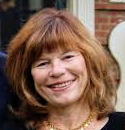
by Patricia Kranz
First, I would like to thank all of the OPC presidents who worked very closely with me to ensure the survival and health of the OPC. Michael Serrill was president when I was hired. The first president I worked with for a 2-year term was Marcus Mabry, then Pancho Bernasconi, Deidre Depke, and Paula Dwyer. I was very fortunate to work with Scott for 4 years.
When I started in 2014, the membership was aging and it was hard to recruit new and younger members. Social media was beginning to replace in-person gatherings and news organizations were closing foreign bureaus, laying off correspondents, and declining to pay for OPC memberships for their journalists. As more journalists became freelancers, many found it hard to pay dues themselves.
To entice young and freelance journalists to join the OPC, the board approved a special membership category for journalists 29 and under with dues of $20, the price of a drink or two at a midtown bar. Freelance journalists can request a dues subsidy if they cannot afford full dues. We initiated the OPC press IDs, which became hugely popular. The IDs, which expire after one year, also serve as an incentive for members to pay dues each year.
In 2019, the OPC partnered with London’s Frontline Club for two panels on How to Freelance Safely. Marcus Mabry was OPC president, and he and I went to London so he could participate on the second panel, which included Frontline Club founder Vaughn Smith. Those panels led to a discussion about bringing together news organizations and freelancers to cooperate on safety training and protocols. Vaughn later came to New York City, where the OPC organized a meeting that included the two clubs, representatives of Reuters, the New York Times and other news organizations, Human Rights Watch, and journalism safety groups. That meeting was the start of a process that culminated with the creation of A Culture of Safety, commonly called ACOS. (The OPC Foundation helped administer ACOS for many years.)
COVID was a big challenge. The office was inaccessible for about six months because Club Quarters was boarded up. We had to cancel the 2020 Awards dinner just one month before it was to be held. We scheduled a dinner for April 2021 but ended up postponing it until September. As a safety precaution, we asked all winners to send us an acceptance video in case we had to do the September dinner virtually. In the end, we had the in-person dinner in September and showed the videos there. People loved the videos, which enabled us to showcase the actual work as well as see and hear the journalists. We continue that practice to this day.
Technology helped us survive. I could remotely access my office computer, which contains the OPC member database. To keep programming alive, we started a Winners series, where each of the 2020 OPC Award winners discussed their winning work with an editor or producer on Zoom. Those 20 Zoom programs were a big success, and set a precedent for the series we now call How I Did It.
During lockdown, Bill Holstein suggested that the OPC raise money to give emergency grants to freelance journalists who could not work, or who could not get home. That year the OPC gave grants of $750 to 49 journalists. In 2021, the president of the Ford Foundation gave the OPC a grant that allowed the club to give $1000 grants to another 92 journalists.
In 2022, the OPC gave $133,000 in grants to 33 journalists who fled Afghanistan after the fall of the Taliban and were resettling in the United States, again with a generous grant from the Ford Foundation and member donations.
In December of that year, the OPC began distributing 18 grants of $2,000 each to journalists who were struggling to do their work in Ukraine. Sony Electronics kickstarted the fund with a $25,000 donation.
It was heartwarming to be the one to communicate the happy news to grant recipients. But getting the money to them was another story. The OPC uses Chase Bank. Their website does not easily handle online wire transfers to countries in Africa or the Middle East, among others. So I had to go in person to a Chase branch to make each of the grant payments.
It was even harder to pay Ukrainian grantees. Chase would not send any money to Ukraine because it was on their list of “corrupt” countries. Western Union’s website also would not handle online payments to Ukraine. In the end, I had to go to Chase and withdraw thousands of dollars in cash and then go to a check cashing outlet, which was willing to send payments to Western Union offices in Ukraine, where the recipients would pick up the money. It reminded me of banking in Moscow when I was a journalist there in the 1990s. We all got used to carrying around large amounts of cash.
Digitizing the OPC’s archives was a major project. I hired a company to scan all OPC Bulletins and Dateline magazines that were in the office. The Bulletins chronicle all of the club’s activities and challenges over the decades. Dateline magazine lists award winners from each year, and stories written by famous journalists about major issues of their day. The OPC has a rich history and I am gratified that much of it is available to anyone on archive.org.
I want to thank Sandra Stevenson for leading the program committee for the past several years, building it up and bringing in more governors to help develop program ideas. Thanks to Cathy Manso, who came on board a year ago to handle social media and edit the Bulletin. She jumped right in, is willing to take on any task we throw at her and is a pleasure to work with.
Heartfelt thanks to Scott, who has presided over the OPC in a tumultuous period for international journalists. He was a hands-on president who worked tirelessly behind the scenes to get input from the executive committee and other governors on issues important to the OPC. He helped guide me through many challenges. He spearheaded the drive to convert the OPC into a 501-c-3, which will help ensure the future of the club. I will miss our weekly calls.
Lastly, I want to welcome Lauren Walsh. She has the perfect credentials to lead the Club in a rapidly changing world.