Event Coverage Highlight

FPF Leads OPC Training on Digital Security for Journalists Abroad
By Cathy Manso
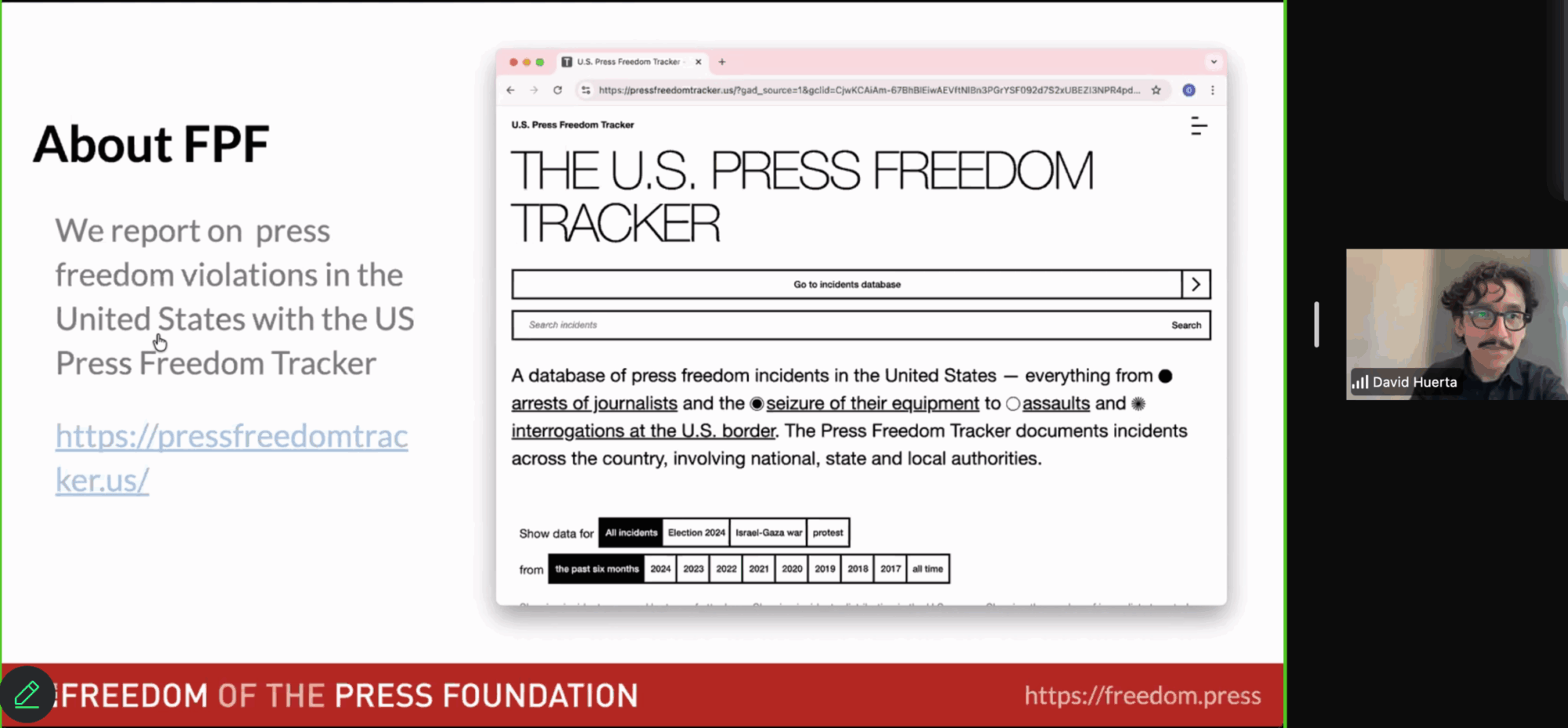 Digital security has become a cornerstone of safe international reporting, as journalists navigate increasingly aggressive surveillance environments and cross-border risks.
On Nov. 12, the OPC hosted a virtual training session led by David Huerta and Harlow Holmes of the Freedom of the Press Foundation (FPF), who outlined practical strategies for protecting devices, data, and sources while traveling.
The presenters framed digital travel safety as a risk-assessment process: identify what you need to protect (i.e. files and contacts), consider who might want access to it, and weigh the likelihood and potential impact of a compromise. That calculation, they noted, should drive every decision about what to bring and how to secure it.
Huerta highlighted two common approaches to preparing for travel: reducing an everyday device to a minimal, encrypted “travel state,” backed up and easily restorable afterward, or provisioning a dedicated travel device with only essential apps and data. They emphasized the importance of full-disk encryption paired with strong passcodes.
They walked participants through backup options, including local encrypted drives and cloud services, noting that Apple’s Advanced Data Protection offers end-to-end encrypted iCloud backups, while other major platforms may comply with legal requests for user data.
The training also covered practical safeguards: using password managers, relying on authenticator apps or hardware security keys for two-factor authentication, securing communications with Signal, and using VPNs judiciously. Holmes underscored the importance of keeping software updated to reduce malware exposure.
Journalists traveling to high-risk countries — including China and parts of Mexico — were urged to take extra precautions, such as avoiding personal devices entirely, minimizing stored sensitive information, and assuming that networks and telecom operators may be monitored. Additional operational guidance included powering devices off at border crossings, encrypting external drives, practicing backup and restore procedures in advance, and using encrypted file containers for cloud uploads.
Throughout the session, the trainers stressed that preparation is key, especially when it comes to protecting contacts and sources. Tools like encrypted password managers, they said, can serve as secure vaults for sensitive information.
For more information, visit Freedom of the Press Foundation’s digital security hub and related guides covering border security, VPN selection, encrypted file storage, and more.